
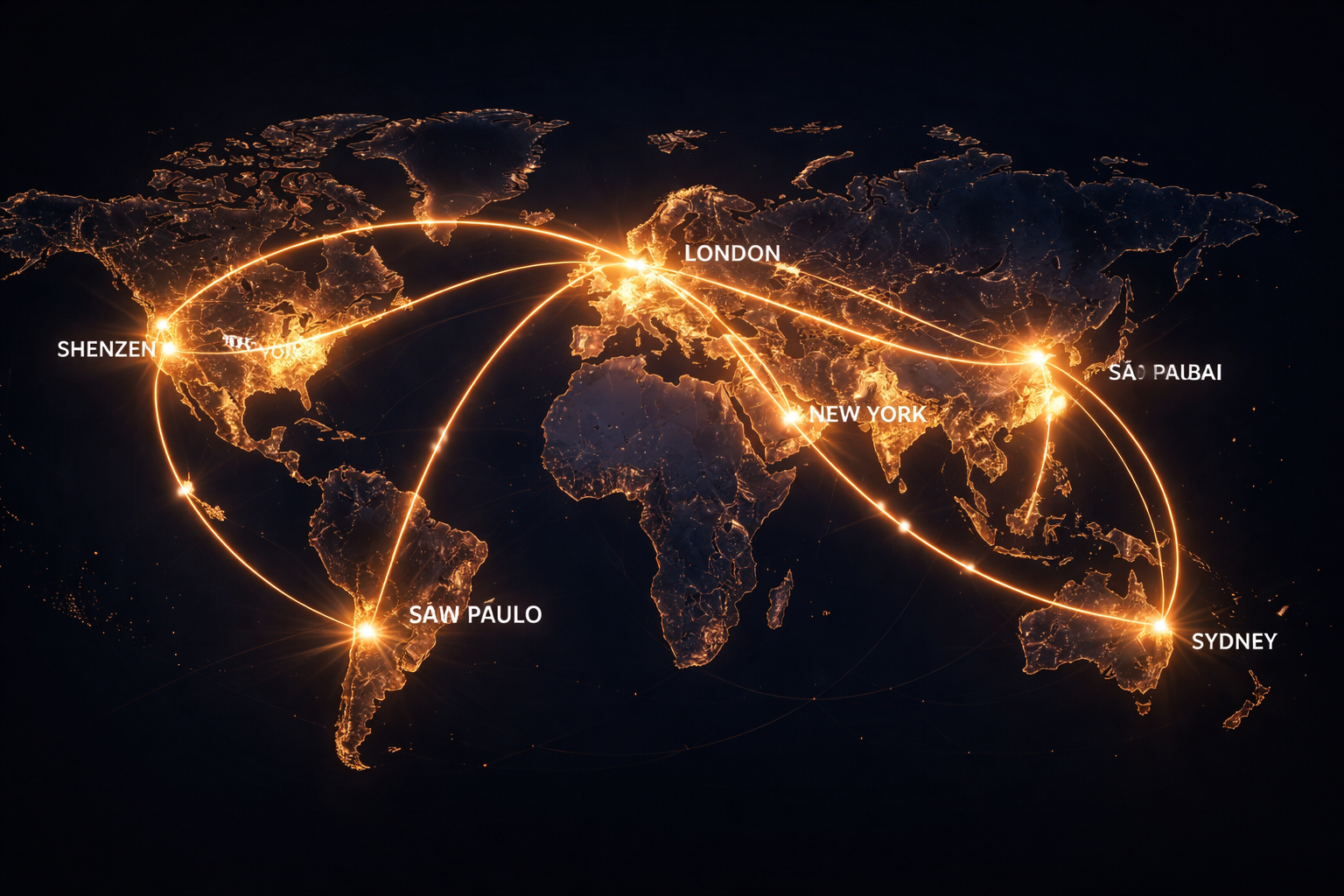
The supply chain disruptions of 2020–2023 forced a fundamental rethink of procurement strategy across industries. Container rates that had been stable at $1,500–$2,000 per FEU for years spiked to $15,000–$20,000. Port congestion at Los Angeles and Long Beach added 4–6 weeks to ocean transit times. Semiconductor shortages halted automotive and electronics production globally. The lesson was clear: lean, just-in-time supply chains optimised purely for cost are fragile.
The Resilience vs. Efficiency Trade-Off
Traditional supply chain management focused on minimising inventory and maximising efficiency — the Toyota Production System applied globally. This approach works well in stable conditions but fails catastrophically under stress. Resilient supply chains accept a higher baseline cost in exchange for the ability to absorb shocks without catastrophic disruption.
The goal is not to choose between efficiency and resilience, but to find the right balance for your specific product, market, and risk profile.
Strategy 1: Supplier Diversification
Single-source dependency is the most common supply chain vulnerability. For any critical component or product, maintain at least two qualified suppliers — ideally in different geographic regions. This does not mean splitting your volume equally; a 70/30 or 80/20 split between a primary and backup supplier preserves cost efficiency while maintaining a live alternative.
In practice, qualifying a backup supplier requires the same rigour as qualifying a primary: factory audit, sample approval, and a trial order. Many companies skip this step because it requires upfront investment with no immediate return — until the day the primary supplier fails.
Strategy 2: Safety Stock and Buffer Inventory
The pandemic demonstrated that "zero inventory" is a liability, not an achievement. Calculating the right safety stock level requires understanding:
- Your average daily sales velocity
- Supplier lead time variability (not just average lead time)
- The cost of a stockout (lost sales, customer churn, expediting costs)
- The cost of carrying inventory (storage, capital, obsolescence risk)
For most consumer goods sourced from China, a safety stock of 60–90 days of sales provides meaningful protection against supply disruptions without excessive carrying costs.
Strategy 3: Near-Shoring and China+1
The "China+1" strategy — maintaining production capability in a second country alongside China — has gained significant traction since 2020. Vietnam, India, Bangladesh, Mexico, and Turkey are the most common alternatives, each with different strengths:
- Vietnam: Electronics, garments, footwear — strong manufacturing base, lower labour costs than China
- India: Pharmaceuticals, textiles, engineering goods — large domestic market, improving infrastructure
- Mexico: Automotive, electronics, consumer goods — proximity to US market, USMCA trade benefits
- Bangladesh: Garments — lowest labour costs for apparel
China+1 is not about replacing China — it is about reducing concentration risk while maintaining access to China's unmatched manufacturing ecosystem.
Strategy 4: Demand Forecasting and Supplier Collaboration
Suppliers cannot plan production without visibility into your demand. Sharing 3–6 month rolling forecasts with key suppliers allows them to pre-order materials, schedule production capacity, and flag potential constraints before they become crises. This collaborative approach is standard practice in automotive and electronics supply chains and is increasingly being adopted in consumer goods.
Strategy 5: Supply Chain Visibility Technology
You cannot manage what you cannot see. Modern supply chain visibility platforms provide real-time tracking of shipments, inventory levels across the supply chain, and early warning of potential disruptions. Even basic tracking — knowing where your containers are at any given time — dramatically reduces the time to respond to delays.
Fusion Global Supply's supply chain management team provides ongoing visibility and management for clients with complex, multi-supplier sourcing programmes. Contact us to discuss how we can strengthen your supply chain resilience.