
Freight mode selection is one of the most consequential decisions in international trade — yet many importers default to a single mode without fully understanding the cost and timeline implications. At Fusion Global Supply, our logistics team handles hundreds of shipments annually across both ocean and air freight, and the right choice depends on several interconnected factors.
Ocean Freight: The Economics of Scale
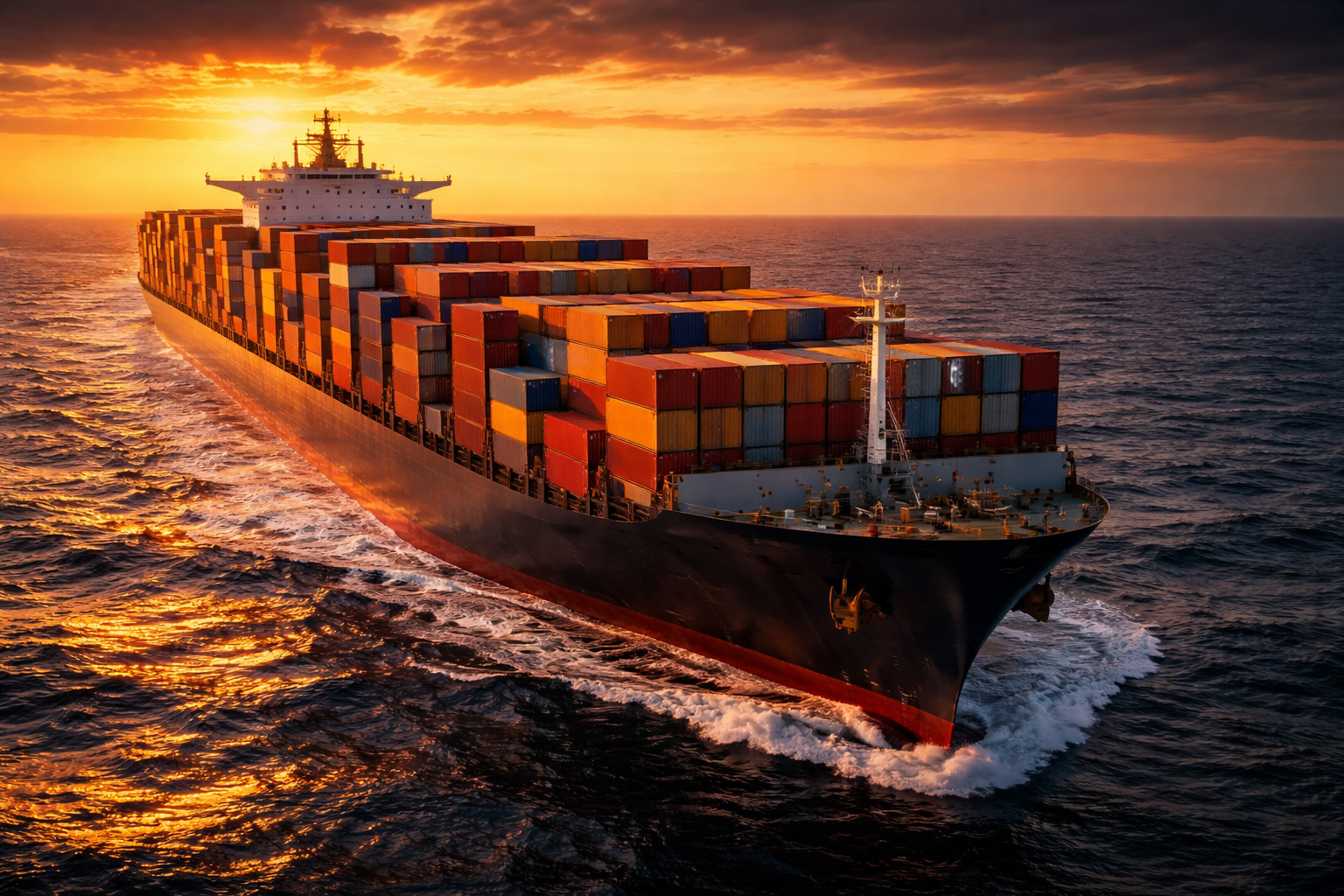
Ocean freight remains the dominant mode for international trade, carrying approximately 90% of global cargo by volume. Its primary advantage is cost: for shipments above roughly 200 kg or 1 CBM (cubic metre), ocean freight is almost always cheaper than air on a per-kilogram basis — often by a factor of 5–10x.
FCL vs. LCL
Ocean shipments move in two configurations:
- FCL (Full Container Load): You book an entire container (20-foot or 40-foot). Your goods travel alone, reducing handling damage and transit time variability. FCL is cost-effective when you can fill at least 60–70% of a container.
- LCL (Less than Container Load): Your goods share container space with other shippers' cargo. LCL is more economical for smaller volumes but adds 3–7 days for consolidation and deconsolidation at origin and destination ports.
Transit Times from China
Typical ocean transit times from Shenzhen/Shanghai:
- US West Coast (Los Angeles, Long Beach): 14–18 days
- US East Coast (New York, Savannah): 25–32 days
- Europe (Rotterdam, Hamburg, Felixstowe): 28–35 days
- Australia (Sydney, Melbourne): 18–24 days
- Middle East (Dubai, Jeddah): 18–25 days
Air Freight: Speed at a Premium
Air freight is 4–7 days from China to most global destinations, making it the only viable option when speed is critical. Typical scenarios where air freight makes commercial sense:
- High-value, low-weight goods (electronics components, jewellery, medical devices)
- Urgent replenishment to prevent stockouts during peak season
- Time-sensitive product launches or trade show samples
- Perishable or temperature-sensitive goods
- Initial orders where you need to test the market quickly before committing to ocean volumes
The Landed Cost Calculation
The correct comparison is not freight cost alone — it is total landed cost, which includes freight, insurance, customs duties, port handling, inland delivery, and the cost of capital tied up in inventory during transit. A 30-day ocean shipment means 30 days of working capital locked in goods at sea. For high-margin, fast-moving products, the carrying cost of that capital can exceed the freight cost differential.
Incoterms: Who Pays for What
Incoterms define the point at which risk and cost transfer from seller to buyer. The most common terms in China trade are:
- FOB (Free On Board): Seller delivers to the port; buyer arranges and pays for freight and insurance from that point. Most common for experienced importers.
- CIF (Cost, Insurance, Freight): Seller arranges and pays for freight and insurance to destination port. Convenient but gives you less control over freight costs and carrier selection.
- DDP (Delivered Duty Paid): Seller handles everything including customs clearance and duties at destination. Maximum convenience, minimum control.
How We Manage Your Freight
Fusion Global Supply's logistics team, led by Nicole, coordinates freight from factory gate to your warehouse door. We maintain relationships with multiple ocean carriers and air freight consolidators, allowing us to secure competitive rates and reliable space even during peak seasons. Contact us for a freight quote on your next shipment.