
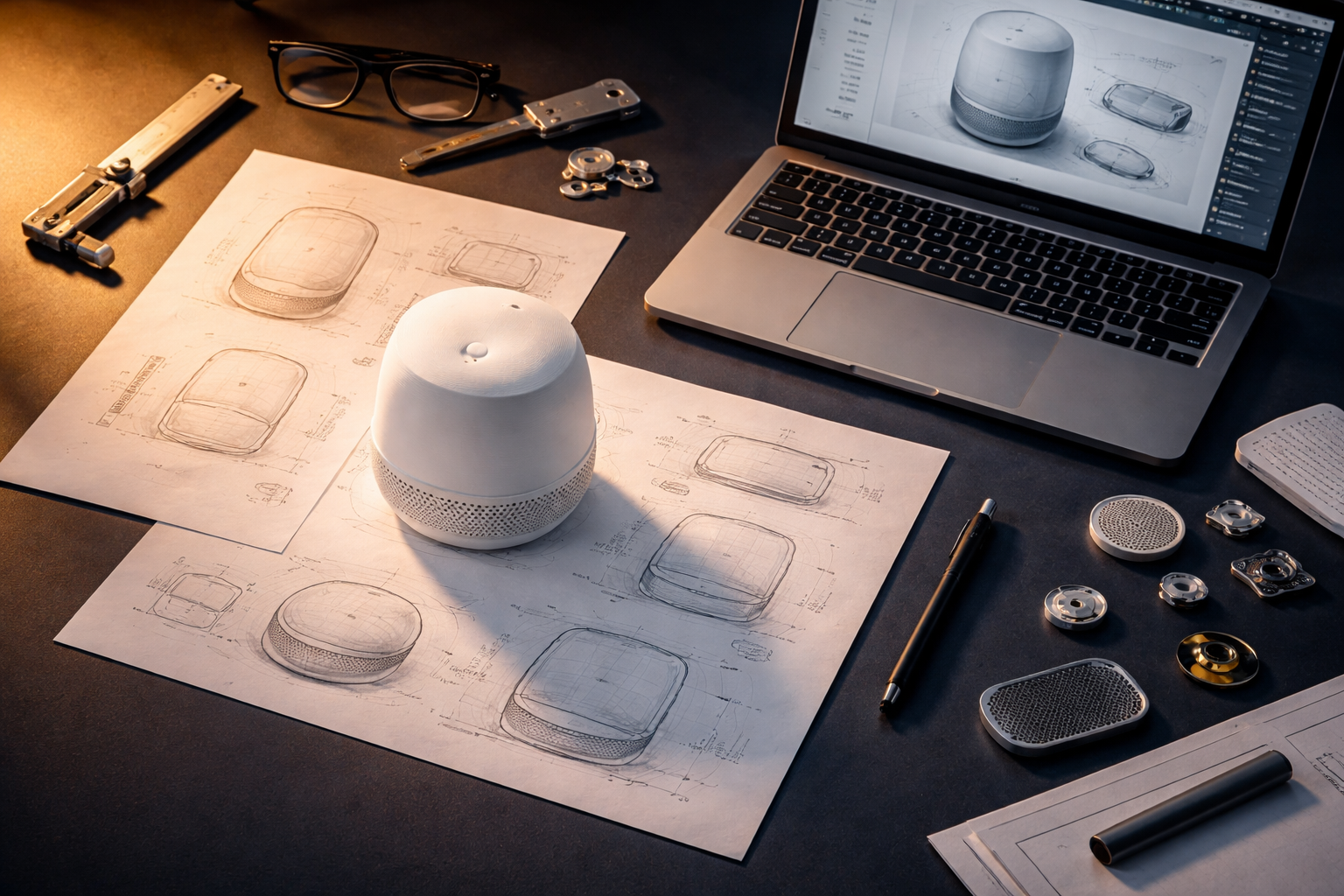
Original Equipment Manufacturing (OEM) — where a factory produces goods to your specification and branding — is the foundation of countless successful consumer and industrial product businesses. China's OEM ecosystem is the most developed in the world, with factories capable of producing virtually any product category to international quality standards. But the path from concept to mass production is longer and more complex than most first-time buyers anticipate.
Phase 1: Concept Validation and Specification Development
Before approaching any factory, your product concept needs to be translated into a manufacturable specification. This does not require a finished engineering drawing — factories can assist with design — but you need to clearly articulate:
- The product's function and intended use
- Target market and regulatory requirements (CE for Europe, FCC for USA, etc.)
- Material preferences and constraints
- Target retail price (which implies a target manufacturing cost)
- Estimated annual volume (which determines whether tooling investment is justified)
At this stage, it is worth consulting with an experienced sourcing partner who can advise on manufacturability and realistic cost expectations before you invest in tooling or prototyping.
Phase 2: Factory Selection for Development
Not all factories are equipped for development work. A factory capable of OEM development should have:
- An in-house engineering or R&D team
- CAD/CAM capability and CNC machining for prototype tooling
- Experience with your product category and target certifications
- A track record of successful OEM projects with international clients
Avoid factories that claim to develop any product — specialisation matters enormously in OEM development.
Phase 3: Prototyping and Iteration
The prototyping phase typically involves 2–4 rounds of samples before reaching an approved design. Each round should be evaluated against your specification, with clear written feedback to the factory. Common issues at this stage include dimensional deviations, material substitutions, and surface finish inconsistencies.
Budget 6–12 weeks for the prototyping phase for a moderately complex product. Rushing this phase is the most common cause of expensive problems in mass production.
Phase 4: Tooling and Mould Approval
For products requiring injection-moulded plastic or die-cast metal components, tooling is a significant upfront investment — typically $3,000–$30,000 per mould depending on complexity and material. Key considerations:
- Mould ownership: Ensure your contract specifies that you own the tooling, not the factory. This is critical for switching suppliers later.
- T1 samples: The first samples from production tooling (T1) almost always require adjustments. Budget for 2–3 rounds of mould modifications.
- Mould maintenance: Specify in your contract who is responsible for mould maintenance and what the factory's liability is for mould damage.
Phase 5: Pilot Production and Golden Sample
Before committing to full mass production, run a pilot batch of 50–200 units. This validates the production process, identifies any assembly issues, and produces the "golden sample" — the approved reference unit against which all production is inspected.
Protecting Your Intellectual Property
IP protection in China has improved significantly but requires proactive management:
- Register your trademark in China before production begins (not after)
- File a utility model patent for functional innovations
- Use Non-Disclosure Agreements (NDAs) and Non-Compete clauses in supplier contracts
- Avoid sharing complete technical packages with multiple factories simultaneously
- Consider splitting production of key components across different suppliers
Fusion Global Supply's product development team, led by Rohan Yadav, has managed OEM projects across electronics, consumer goods, industrial equipment, and lifestyle products. Contact us to discuss your development project.